These People Already Pay for PR Which Means They Have Budget and That Makes Them Perfect Leads
The economics of cold outreach are brutal and unforgiving. For every hundred emails sent, somewhere between one and five produce a meaningful response. This means that ninety-five or more of every hundred emails are wasted effort, and the sender's time, energy, and sender reputation are consumed by a process that fails far more often than it succeeds. Improving this ratio by even a few percentage points has enormous implications for the viability of outreach as a strategy, because the difference between a two percent response rate and an eight percent response rate is the difference between outreach being a marginal, frustrating activity and outreach being a productive, scalable channel.
The variable that has the most impact on response rate is not the email copy, although copy matters. It is not the subject line, although subject lines matter. It is not the sending time, although timing matters. The variable with the most impact is lead quality: are you emailing someone who has a reason to care about what you are offering? A perfectly written email sent to someone who has no budget for content, no interest in visibility, and no capacity to evaluate a guest posting pitch will produce exactly zero response regardless of how compelling the copy is. A mediocre email sent to someone who actively invests in content marketing and is looking for quality contributions has a realistic chance of producing a positive response despite its imperfections.
PR spending is the clearest available signal of content marketing budget. A company that pays for PR distribution, which costs anywhere from a few hundred to several thousand dollars per release, has demonstrated with actual money that it values online visibility. This is not a stated preference in a LinkedIn bio or a vague mention of "content-first strategy" on a company website. It is a financial transaction that proves the company allocates budget to getting its message in front of audiences. That financial proof is what separates PR-sourced leads from generic database leads, and it is what makes the response rate difference so stark.
Budget as a Qualifying Signal and Why It Matters More Than Company Size
Traditional lead qualification for outreach focuses on company size, industry, and domain authority. These filters have some value, but they miss the most important qualification criterion: willingness to spend on visibility. A large company with a strong domain authority might have a locked-down content policy that rejects all external contributions. A small company with modest metrics might have an aggressive content strategy that actively seeks guest authors. Company size correlates weakly with content openness, and domain authority says nothing about budget or willingness to collaborate.
PR spending cuts through this ambiguity with a signal that is both clear and recent. A company that distributed a press release last month has budget. Period. The amount of the budget is unknown, but its existence is confirmed. A company that has distributed multiple press releases over the past quarter has recurring budget, which is even more valuable because it indicates a sustained marketing commitment rather than a one-time expenditure. Recurring PR spending suggests an ongoing content strategy that needs fresh material, and guest content is one of the most efficient ways to supplement a content calendar without increasing internal production workload.
The budget signal also predicts responsiveness to the specific value proposition that guest posting represents. Guest posting offers free content in exchange for a byline and a backlink. For a company that is already paying for content visibility through PR distribution, a guest article represents additional visibility at zero marginal cost. The economics of this proposition are compelling to anyone who manages a content budget: here is a piece of content that you did not have to pay to produce, that serves your audience, that fills a slot on your content calendar, and that costs you nothing except the editorial effort of reviewing and publishing it. Companies that already understand the value of content visibility, as proven by their PR spending, grasp this value proposition immediately.
The qualification also filters out a significant category of time-wasting leads: companies that aspirationally claim to do content marketing but do not actually allocate resources to it. Every LinkedIn profile says "content is king." Every company website mentions thought leadership. But the gap between marketing aspiration and marketing execution is enormous, and PR spending is one of the few verifiable indicators that a company has crossed from aspiration to execution. Outreach to companies that aspire to content marketing but do not actually fund it produces conversations that end in "we'd love to but we don't have the bandwidth right now," which is a polite rejection that consumes the same time and energy as reaching a genuinely interested decision-maker.
The Psychology of Reaching People Who Already Value What You Offer
Cold outreach works best when it proposes something that the recipient already wants. This sounds like a tautology, but it captures a genuine insight about the psychology of cold email reception. A recipient who does not value online visibility will not value a guest posting pitch regardless of how well it is written. A recipient who actively invests in online visibility through PR spending will evaluate the same pitch through the lens of "does this serve my existing goals?" rather than "why is this person emailing me?" The frame through which the email is received determines the response more than the content of the email itself.
PR-sourced leads enter the pitch with a pre-existing frame of "visibility is worth investing in," which is the exact frame that makes guest posting pitches compelling. The sender does not need to convince the recipient that content marketing matters, that backlinks have value, or that guest contributions can enhance a publication's content mix. These are all propositions that the recipient has already accepted, as evidenced by their PR spending. The pitch simply needs to connect those accepted propositions to the specific guest article being offered, which is a much easier persuasion task than starting from scratch with a recipient who has never thought about content marketing.
The timing of the pitch relative to the PR activity creates an additional psychological advantage. A company that just completed a PR campaign is in a content marketing mindset. The marketing team is actively thinking about visibility, audience reach, and message distribution. A guest posting pitch that arrives during this period of heightened marketing activity is processed by a mind that is already oriented toward content decisions, which increases both the probability of the email being read and the probability of a positive evaluation. The same pitch arriving three months after the last marketing activity hits a mind that has shifted to other priorities and requires more effort to re-engage with content thinking.
Reciprocity also plays a role. A pitch that opens by acknowledging the company's recent PR achievement, congratulating them on a product launch, funding round, or partnership, creates a subtle social dynamic where the recipient has received something (recognition and congratulation) before being asked for something (consideration of a guest article). This reciprocity effect is modest but real, and it contributes to the higher response rates that PR-sourced outreach consistently produces compared to approaches that open with a request without offering any acknowledgment of the recipient's recent activities.
Building Campaigns Around PR Cycles
PR activity is not random. Companies publish press releases around predictable events: product launches, funding announcements, partnership formations, executive appointments, award wins, and milestone achievements. These events cluster around certain times of the year and certain stages of a company's lifecycle. Understanding these cycles allows outreach campaigns to be timed for maximum relevance, targeting companies when their PR activity peaks and their receptivity to additional visibility opportunities is highest.
Product launch seasons produce a burst of PR activity that creates a concentrated pool of outreach targets. Companies launching products need maximum visibility during the launch window, and a guest article that discusses the product's category, use case, or industry impact is directly relevant to the company's immediate marketing objective. The pitch practically writes itself: "Your recent launch of [product] addresses [problem], and the article I am proposing would help your audience understand [related topic], which complements your launch messaging." The alignment between the pitch and the company's current priority makes this one of the highest-converting outreach scenarios.
Funding announcements create a different but equally valuable outreach opportunity. A company that just raised a Series A or Series B has both budget (freshly funded) and visibility needs (investors expect marketing activity post-funding). Guest content offers that align with the company's growth narrative, such as articles about industry trends, market analysis, or technology deep-dives, serve the company's need to establish thought leadership in the eyes of its new investors. The freshly funded company is often more receptive to visibility opportunities than an established company because the pressure to demonstrate marketing momentum is acute.
outreach.yeb.to enables campaign construction around these PR cycles by filtering PR articles by type, date, and industry. An outreach campaign targeting companies that announced product launches in the SaaS space during the past two weeks produces a list of targets with immediate visibility needs and recent marketing budgets. A campaign targeting companies that announced funding rounds in fintech during the past month produces targets with fresh capital and growth-stage marketing urgency. Each campaign configuration produces a targeted list that is optimally matched to a specific outreach angle and timing strategy.
Response Rates and the Data Behind the Approach
The response rate differential between PR-sourced outreach and generic outreach is not a theoretical claim. It is an observable pattern across campaigns that use both approaches in parallel. Generic cold outreach to industry contacts typically produces response rates between one and three percent. PR-sourced outreach to companies with verified recent marketing activity typically produces response rates between five and twelve percent, with well-crafted campaigns in receptive industries occasionally reaching fifteen percent or higher.
This three to five times improvement in response rate compounds across the metrics that matter for a guest posting program. If one hundred emails are sent using each approach, generic outreach produces one to three responses, of which perhaps one leads to a published article. PR-sourced outreach produces five to twelve responses, of which three to six lead to published articles. Over a quarter of consistent weekly outreach, the PR-sourced approach produces dozens of published guest articles compared to a handful from the generic approach, using the same email volume and the same amount of sender time.
The quality of the placements also differs. Companies that invest in PR tend to maintain higher-quality web properties, because the same organizational commitment to visibility that drives PR spending also drives website quality, content standards, and audience cultivation. Guest articles placed on these properties carry more SEO value (higher domain authority, more relevant backlinks) and more brand association value (appearing alongside professional content rather than low-effort filler) than articles placed on sites that accept any guest contribution without editorial standards.
The compounding effect of better targeting, higher response rates, and higher-quality placements makes PR-sourced outreach the dominant strategy for any guest posting program that prioritizes quality over volume. The approach trades list size (PR-sourced lists are smaller than generic databases) for list quality (every target is budget-verified and recently active), and this trade produces better outcomes by every measure: more responses, more placements, better links, and a professional reputation as an outreach sender who targets thoughtfully rather than spamming indiscriminately.
Båndbredde, overførsel, gennemstrømning og porthastighed er ikke det samme
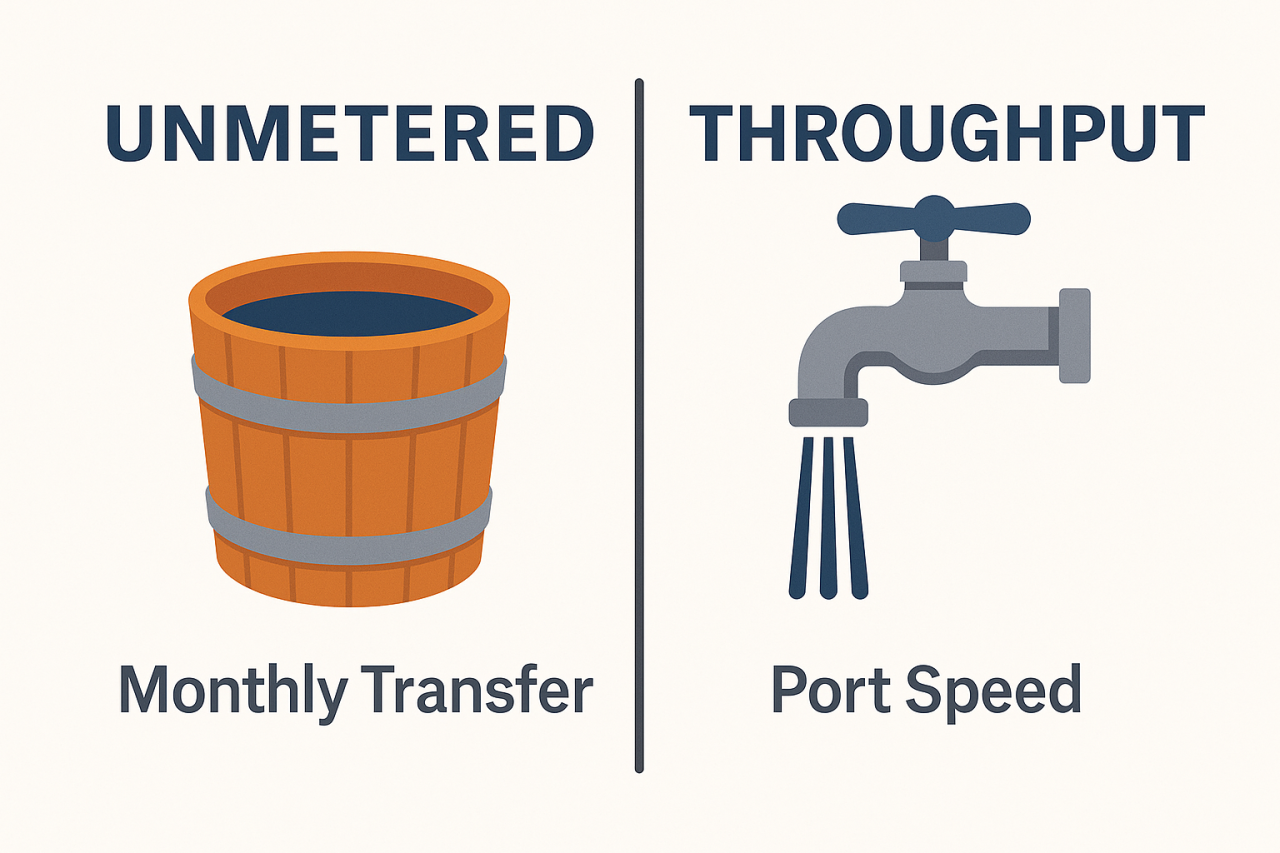
Jeg er ligeglad med, hvor mange gange industrien slører begreberne—hvis vi skal være ærlige om, hvad du faktisk kan presse igennem, skal vi adskille vokabularet. Båndbredde er størrelsen på røret på et givet tidspunkt. Gennemstrømning er det, du faktisk opnår i det rør efter overhead, konkurrence og begrænsninger. Dataoverførsel er den samlede mængde, der flyttes over en periode, normalt en måned. Porthastighed er den hårde grænse for øjeblikkelig flow, typisk udtrykt som 10 Mbps, 100 Mbps, 1 Gbps eller højere.
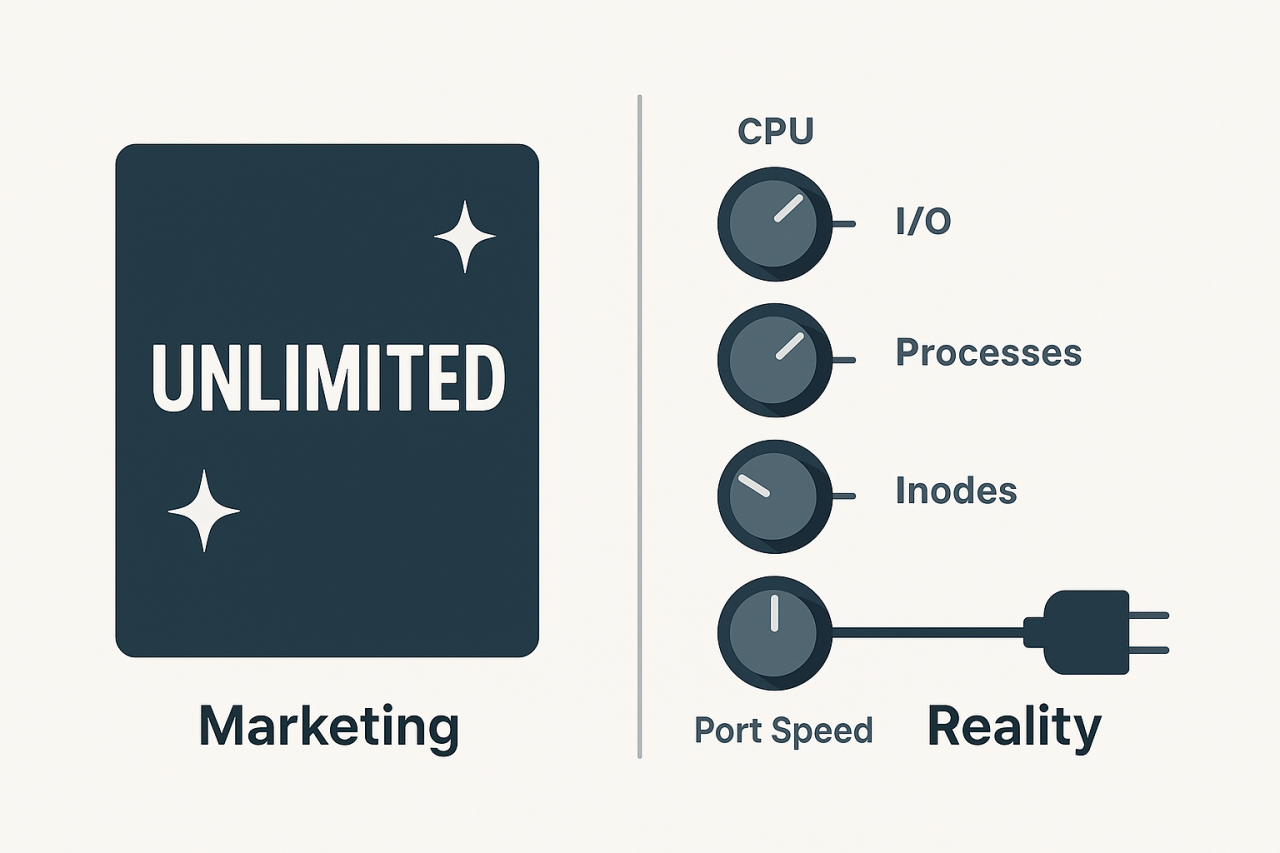
"Ubegrænset" er et faktureringsløfte om månedlig overførsel, ikke om den øjeblikkelige hastighed dine pakker får kl. 12 på en mandag. "Ubegrænset" er en marketingblomst, der antyder, at der ikke er nogen grænse, men hvad du virkelig har, er en plan, der ikke tæller gigabytes for overskridelse, mens der håndhæves begrænsninger gennem alt andet: CPU-andele, I/O, procesantal, forbindelseskonkurrence og i sidste ende den port, dine pakker skal krydse. En 1 Gbps port kan i teorien flytte en massiv mængde på en måned, men hvis værten former din port til 100 Mbps efter fem minutters vedvarende gennemstrømning—eller simpelthen giver dig en "burstbar" bane, der træder ned under belastning—fordamper din teoretiske overførsel til reel ventetid og fejlede anmodninger. Det rør, du troede, du købte, er det rør, du kun besætter, når du er stille.
Når jeg gennemgår en plan, spørger jeg ikke "Er båndbredden ubegrænset?" Jeg stiller et andet, grimmere spørgsmål: "Hvad er den værste øjeblikkelige gennemstrømning, jeg er garanteret, når naboerne og jeg alle er travlt beskæftiget?" Det er det tal, der forhindrer dit checkout i at gå i stå, dine billeder i at kravle og dine baggrundsjob i at opbygge en landingsbane af forsøg, du vil betale for senere.
Hvordan delt hosting er designet til at se grænseløs ud (indtil den ikke er det)
Delt hosting er et karnevalstrick bygget på gennemsnit. De fleste sider er små. De fleste trafikker er kortvarige på venlige måder. De fleste sider er cachelagret efter den første gennemgang. Det er sådan værter kan overtegne computere, hukommelse, lager I/O og netværksbaner, mens de stadig serverer glade dashboards til tusindvis af kunder. Maskineriet bag denne illusion er en rede af fair-share planlæggere og kvotasystemer. CPU-andele forhindrer en enkelt konto i at tage en hel kerne for længe. IOPS-formning holder støjende naboer fra at sulte SAN. PHP-FPM og Node processkapsler sikrer, at kun en håndfuld anmodninger kan udføres dynamisk ad gangen. Inode-lofter begrænser stiltiende antallet af filer, du kan holde på disk, og kvæler medietunge sider, før overførslen nogensinde vises i en graf.
Det kritiske at bemærke er, at ingen af disse systemer berører “båndbredde” linjeposten. Den forbliver umålt, så påstanden forbliver teknisk ærlig. I det øjeblik din app begynder at se travl ud i mere end et øjeblik, håndhæver fair-share regler “typisk brug” ved at stramme de dele af din stak, de kontrollerer. Du vil se dynamiske anmodninger kø, mens statiske aktiver føles fine. Derefter bliver statiske aktiver langsommere, fordi oprindelsen bliver den flaskehals, som et CDN ikke helt kan maskere. Værten opkræver dig stadig ikke for overførsel. De sørger simpelthen for, at du bruger mindre af det ved at reducere, hvor hurtigt du kan servere det.
Jeg synes ikke, at delte værter er skurke for dette. Modellen fungerer for langt de fleste websites, og den har holdt nettet billigt for små udgivere. Men udtrykket “ubegrænset båndbredde” giver den forkerte mentale model. Det inviterer dig til at designe, som om du har en dedikeret bane, og det har du ikke. Du har tilladelse til at hælde vand i en spand uden at betale pr. liter, men du deler stadig hanen.
De småt skrevne regler, der faktisk styrer din brug
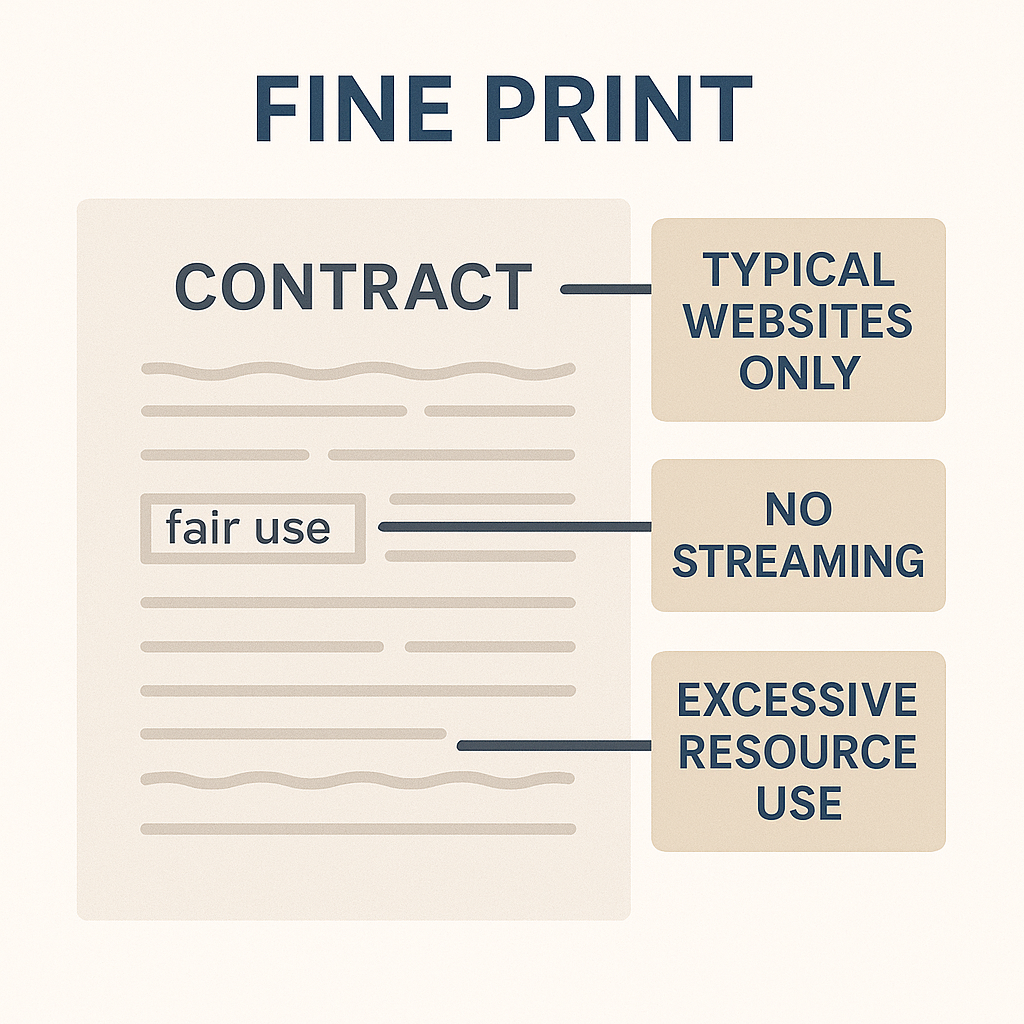
Hvis du vil have sandheden, skal du ikke læse pristabellen; læs Acceptable Use Policy. Du vil finde sukkerbelagte sætninger som “typiske websider” og “fair brug,” hvilket oversættes til “hvis du begynder at ligne en filudvekslingsnode, en streaming site, et media-spejl eller et download hub, forbeholder vi os retten til at stramme, migrere eller suspendere dig.” Du vil finde forbud mod lyd- og videostreaming fra oprindelsen, filfordeling i skala, backup-arkiver gemt på webplads, offentligt tilgængelige ZIP-samlinger og “ressourcekrævende” scripts, der kører i mere end et par sekunder hver. Du vil finde daglige CPU-sekundbegrænsninger, databaseforespørgselslofter og forbindelsestælling, der får din yndlingsasynkrone crawler til at ligne et angreb.
Indgangsproceskapsler er især snedige. I cPanel-lignende miljøer betyder en “indgangsproces” ofte “antallet af samtidige dynamiske anmodninger tilladt at starte.” Ram det loft, og den næste besøgende køer ikke; de får fejl. I/O-begrænsninger og IOPS-numre gør det samme mod disk. Inode-begrænsninger afskærer dig, når du har “for mange filer,” hvilket ambitiøse mediebiblioteker tripper, før de rører gennemløbet. Ingen af disse ting krænker “ubegrænset båndbredde.” De sikrer bare, at du bruger meget lidt af det, når dit site begynder at vokse.
Jeg har mistet tællingen af planerne, der hævder “ubegrænset,” mens de stille sætter CPU til “100% af en kerne i et par sekunder,” I/O til “et par megabytes per sekund vedvarende,” og processer til “en håndfuld ad gangen.” Det er et bælte, seler og et reb. Hvis du rammer alle tre, løber du ikke; du sutter.
Hvordan "ubegrænset" ser ud på en travl mandag
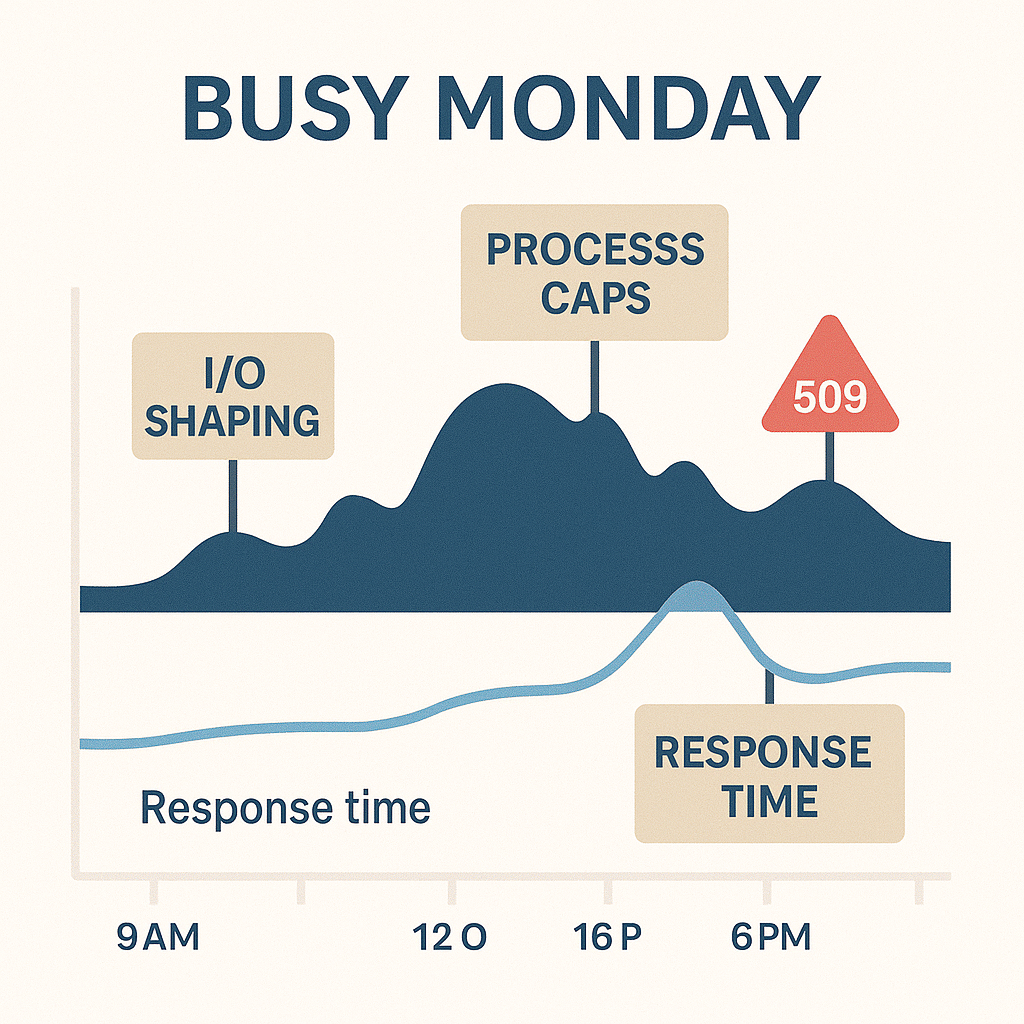
Forestil dig en normal mandag efter en weekendnævning sender dig frisk opmærksomhed. Din HTML er rimelig let, dine billeder er anstændige, du læner dig op ad en CDN for statiske ressourcer, og din oprindelse håndterer de dynamiske dele. Trafikken stiger med en faktor fem. I starten er alt fint, fordi caches er varme, og CDN’en tager de fleste billedanmodninger. Så falder dine dynamiske endpoints bagud. Værtens procesbegrænsning holder kun et lille antal samtidige PHP- eller Node-arbejdere aktive. Køer begynder at danne sig, og svartiderne strækker sig længe nok til at bryde timeouts mellem tjenester. CDN’en hjælper stadig, men cache-misser på HTML begynder at gøre ondt. Din database bliver mere snakkesalig, og I/O-planlæggeren trækker en anden skive fra, fordi du nu er "ressourceintensiv." Dine kunder, med perfekt timing, klikker på billeder, der ikke var varme i CDN’en, og trækker bursts fra oprindelsen, der kolliderer med langsomt dynamisk arbejde.
Hvad der sker næste afhænger af værten. Nogle værter drosler dig gradvist, indtil ydelsen er så dårlig, at besøgende giver op, og din "gennemsnit" vender tilbage til normal. Andre udløser automatiske misbrugsregler og flytter din konto til en lavere klasse pool eller en karantæne VLAN. Nogle få kaster stadig det klassiske 509-svar, "Båndbreddegrænse overskredet," selvom de ikke tæller bytes—509 er blot et nyttigt stopskilt for at købe tid, mens de gennemgår. Resultatet føles identisk: løftet om "ubegrænset" fordamper præcis, når du har brug for det.
Et site, der for det meste serverer cachet HTML og statiske ressourcer, kan muligvis halte igennem med irriterede besøgende. En vogn-tung butik eller en søge-tung app vil tage det på hagen. Smerten viser sig sjældent som en pæn, enkelt metrik. Det er et mosaik af små nedbrud, der samler sig til fejlslagne betalinger og stigende frafald.
Før vi går dybere, vil jeg gøre noget konkret og genanvendeligt, så du kan se det praktiske loft, selv når en plan hævder, at det ikke eksisterer.
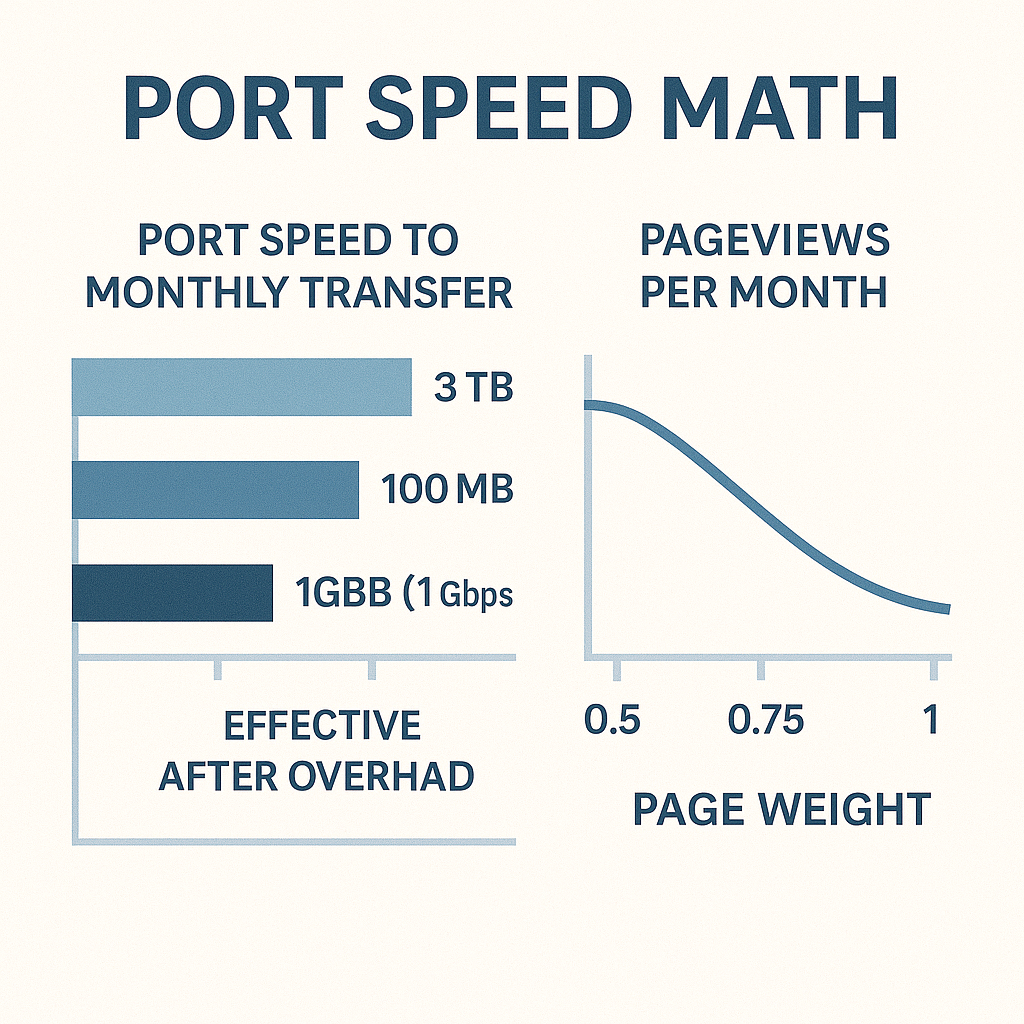
Jeg vil dykke ned i hårde tal i et par minutter. Dette er en Premium Sektion, der fokuserer direkte på den matematik, du kan lave på en serviet for at oversætte porthastighed til månedlig overførsel og derefter til sidevisninger. Hvis du nogensinde har kæmpet med at kortlægge "1 Gbps ubegrænset" til "Hvor mange besøg kan jeg faktisk betjene?" er det her, det falder på plads.
Premium content
Log ind for at fortsætte
De stille dræbere: CPU-throttling, IOPS-shaping og procesbegrænsninger
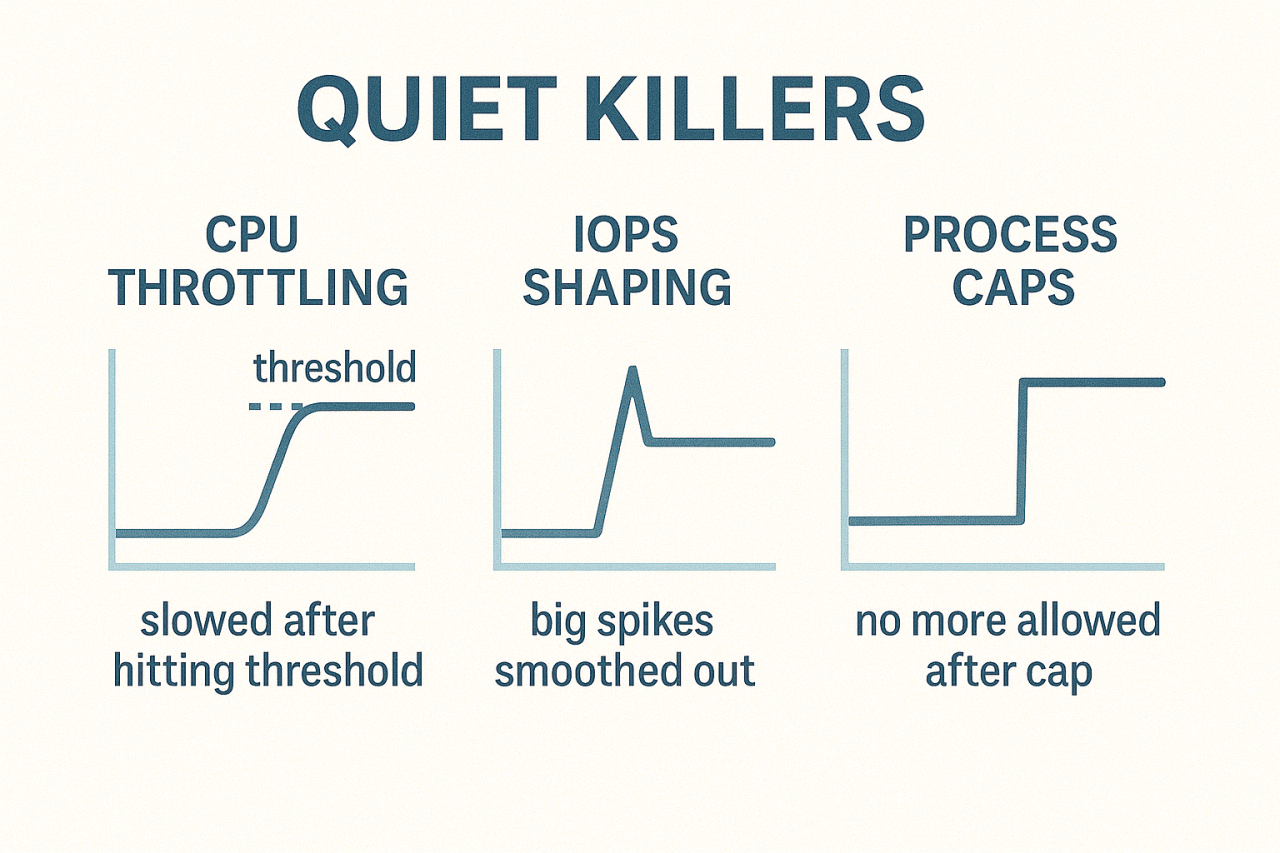
Hvis du nogensinde har oplevet, at et website blev langsommere, mens graferne så "normale" ud, har du mødt de stille dræbere. CPU-throttling er mest synlig, når du ved, hvor du skal kigge. Delte værter tildeler et stykke af en kerne til bursts og nedjusterer derefter under vedvarende belastning. Din app går ikke ned; den slæber. Det er nok til at påvirke søgerangeringer og konverteringsrater uden at udløse alarmer, der ville få support involveret.
IOPS-shaping er mere subtil. Databaser lever og dør af lagringens latenstid. Filtunge apps gør det samme. Værter bruger cgroups og lagrings-QoS til at forhindre store belastninger i at sulte systemet. Du ser ikke en fejl; du ser en tyve millisekunders diskventetid blive til firs, hvilket trækker anmodningstider ind i en ny, grimmere fordeling. Kombinér det med en lav indgangsprocesbegrænsning, og du har skabt den perfekte klemme. Anmodninger tager længere tid, så flere anmodninger er samtidige, hvilket rammer grænsen hurtigere, hvilket taber nye besøgende på gulvet.
Procesbegrænsninger er til sidst guillotinen. Mange planer begrænser PHP-FPM eller lignende til en håndfuld børn. Nogle tilføjer en grænse på det samlede antal samtidige processer pr. bruger. Begge dele lader en vært smile og love "ubegrænset båndbredde", mens de sikrer, at du i praksis ikke kan sende ret meget. Hvis du nogensinde har jagtet en spøgelsesflaskehals på CDN'en eller i din applikationskode blot for at opdage, at værten tillader otte arbejdere og kalder det en dag, har du mærket fælden.
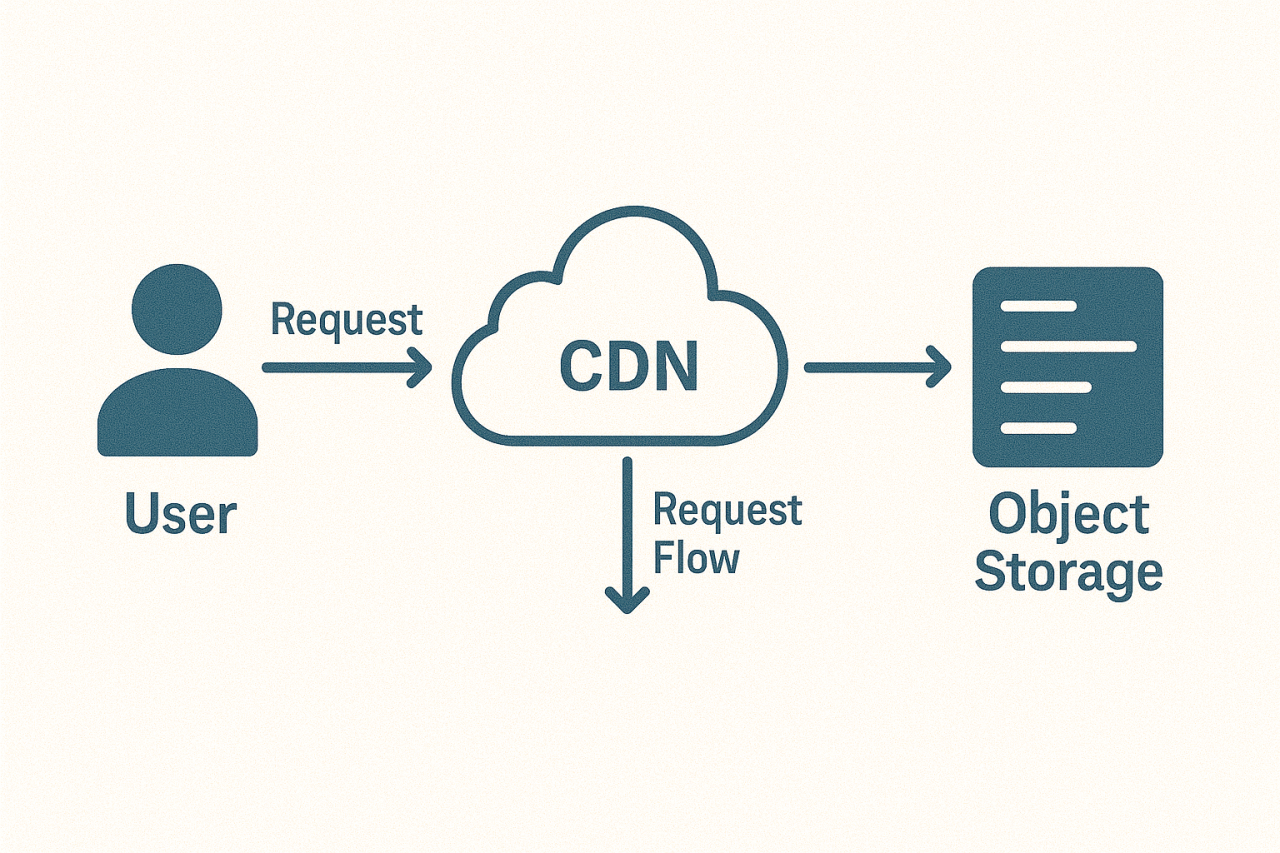
Jeg sætter ikke "ubegrænset båndbredde" i min risikoregister som et problem, der skal løses. Jeg reducerer min afhængighed af det. Modellen, der fungerer for de fleste små og mellemstore sites, er kedelig og effektiv. Cache HTML på kanten så længe dit indhold tillader det. Skub billeder, CSS og JS til en CDN, som du faktisk validerer i produktion med en høj hitrate, ikke kun et logo. Offload tungt medieindhold til objektlagring og peg din CDN der, så oprindelsen aldrig ser det. Hold oprindelsen fokuseret på dynamiske læsninger og skriver, der virkelig har brug for beregning, og gør dem så statsløse og hurtige som muligt.
Når du gør det, bliver "ubegrænset båndbredde" planen acceptabel, fordi du ikke beder den om at bære den belastning, den ikke kan bære uden drama. Selv hvis værten former din oprindelse, absorberer CDN'en den tilfældige karakter af trafikken. Din p95 stabiliserer, og du køber tid til at vælge et skridt, når væksten er reel i stedet for at reagere under et nedbrud. Hele det med småt eksisterer stadig, men du træder ikke på det. Du har bygget en lille, adræt oprindelse i stedet for et lager.
Jeg sætter aldrig videostreaming, filoverførsler, offentlige software-spejle eller backupdistribution på en plan, der siger "ubegrænset". Jeg siger det som en, der har forsøgt at presse dem igennem og derefter forhandlede med ToS-sprog efterfølgende. Disse arbejdsbelastninger er ikke det, som delt hosting er bygget til, og værten vil lukke dig ned i navnet på at beskytte alle andre. Selv hvis du slipper af sted med det kortvarigt, er du kun en omtale væk fra sider med vrede e-mails og en migration ved midnat.
Tunge ZIP-arkiver af produktaktiver eller læringsmaterialer vil udløse de samme alarmer. Offentlige API'er, der opmuntrer til klientafstemning, vil også. Og alt, der opmuntrer brugere til at hente den samme multi-megabyte fil gentagne gange på nye forbindelser, vil ramme portshaping hurtigere, end du tror. Den tråd, der forbinder disse tilfælde, er simpel: de er høj-udgang, lav-beregning arbejdsbelastninger, der angriber værtens transitregning uden at forbruge CPU eller I/O, som deres planlæggere er indstillet til at måle. Denne mismatch er præcis, hvorfor "ubegrænset båndbredde" eksisterer som formulering. Det er et blødt løfte, der er bygget til at blive trukket tilbage i det øjeblik, din brug ophører med at ligne en lille blog.
Jeg vil give dig en advokat-med-benchmarks oversættelsesguide, du kan beholde. Det næste afsnit er en Premium-sektion, hvor jeg oversætter de mest almindelige klausuler, værter bruger, til operationel virkelighed. Hvis du ikke læser andet, så læs dette, når du scanner en plan kl. 1 om natten og undrer dig over, om "ubegrænset" vil bære din næste lancering.
Premium content
Log ind for at fortsætte
Overvåg det, der betyder noget, så du ved det, før suspensionsmailen ankommer
Dashboardet, som din vært giver dig, vil ikke advare dig om den fejl, der kommer. Det vil rapportere gennemsnit og totaler, mens smerten gemmer sig i den lange hale. Jeg holder øje med forskellige signaler. Oprindelses-egress versus CDN-egress fortæller mig, om min cache gør sit arbejde. Hvis oprindelses-egress stiger hurtigere end besøg, ved jeg, at noget bliver omgået eller tømt for aggressivt. Forbindelses-samtidighed er kanariefuglen for procesgrænser; hvis samtidige forbindelser nærmer sig en flad grænse, forventer jeg øjeblikkelige fejl for nye besøgende. Den 95. percentil for båndbredde og anmodningstid betyder mere end gennemsnit, fordi de forudsiger de dele af dagen, hvor værten vil forme dig, og dine brugere vil mislykkes i at fuldføre en rejse.
CPU-stjåletid er en lugttest i et delt miljø. Hvis jeg ser stjåletid stige i mine stille timer, ved jeg, at jeg konkurrerer med naboer, og at mit udbrud vil lande på en træt node. Langsomme forespørgsler er altid værd at bruge den tid, du ikke tror, du har; at rette et dårligt indeks kan være forskellen mellem at overleve en omtale og at bruge en dag på at undskylde. Fejlbudgetter—antallet af fejl, du tillader i et vindue, før du betragter brugeroplevelsen som forringet—binder alt dette sammen. Hvis dine fejl kryber op, før trafikken gør det, har du usynlig friktion, og "ubegrænset" vil ikke afbøde noget.
Følg pengene, og historien holder op med at være mystisk. Transit er dyrt, hvis du ikke kan forhandle gode peeringaftaler, og hvis dine brugere sidder langt fra dine POP'er. Delt hosting amortiserer den omkostning på tværs af tusindvis af konti, hvoraf de fleste knap bruger noget. "Ubegrænset" er et værktøj til kundetiltrækning. Det sænker friktionen og sammenligner sig godt på en tabel, hvor den billigere plan "inkluderer" mere. Værten antager, at du vil være lille, eller at du vil gøre det fornuftige og flytte din tunge trafik til en CDN og objektlagring i det øjeblik, du vokser, hvilket flytter egress til en udbyder, der ikke gør andet end egress.
Skyer vender modellen om. De måler egress, fordi det er deres profitcenter, og fordi deres netværk er dyre at drive på global skala. De lover ikke "ubegrænset", fordi incitamentet er anderledes; de vil have, at du arkitekterer gennemtænkt og betaler for det, du bruger. Delte værter vil have dig til at bringe dit lille site og forblive glad, indtil du ikke længere er lille, hvorefter de vil have dig til enten at optimere eller opgradere. Intet af dette er kynisk; det er sådan regningerne bliver betalt. Men det forklarer, hvorfor Betingelserne er skrevet i fløjlsblødt sprog, og hvorfor de tekniske grænser håndhæves med en let berøring, indtil de ikke gør det.
Beslutningspunkter: hvornår "ubegrænset" er fint, hvornår det er uforsvarligt, og hvordan man migrerer
Jeg afviser ikke "ubegrænset" uden videre. For et lille marketingsite med mest statiske sider og en beskeden blog er det helt fint, hvis du sætter en CDN foran det. For en butik med let trafik og fornuftig caching kan det fungere, mens du finder produkt-marked fit. For en publikation der topper uforudsigeligt, er det risikabelt, medmindre du aggressivt cacher og forud-render. For alt der sender store filer, er det det forkerte værktøj fra dag ét.
Min beslutningstræ er enkel. Hvis din p95 dynamiske svartid er lav og forbliver lav under let stress, kan du køre på en delt plan længere end du tror. Hvis din CDN hit rate er virkelig høj og din origin egress forbliver flad, når trafikken fordobler, er du sikker nok. Hvis en af de betingelser fejler, planlæg flytningen nu. En lille VPS med to vCPU'er og nok hukommelse til at undgå swapping er kedelig og pålidelig. Den giver dig forudsigelig samtidighed, bedre lagerydelse og en netværksbane, du faktisk kan forstå. Du kan stadig bruge den samme CDN og objektlagringsstrategi. Når du vokser fra det, vil du mærke det på måder, du kan måle og planlægge omkring, og du vil træde ind i dedikerede eller administrerede klynger, fordi du vælger at, ikke fordi en ToS klausul tvinger din hånd.
Migrationsstien behøver ikke være dramatisk. Hold din origin stateless, hvor det er muligt, så DNS-overgange er rene. Opbevar sessioner i en delt backend, du kan pege på fra både gamle og nye origins under en kort overlapning. Varm caches op, inden du skifter, så den nye origin ikke tager hele blastet. Pointen er ikke at være perfekt, det er at være forudsigelig. "Ubegrænset" svigter dig uforudsigeligt. Dit mål er at stoppe med at blive overrasket.
Jeg lovede praktiske, levede scenarier, fordi det er sådan, kanterne af dette emne bliver klare. Den næste sektion er en Premium Section med tre virkelige historier, hver starter på "ubegrænset," hver rammer en anden mur, og de præcise ændringer der stabiliserede dem.
Premium content
Log ind for at fortsætte
Min holdning, ligeud: det er umålt, ikke ubegrænset — behandl det sådan
Jeg har ikke noget imod "ubegrænset båndbredde", så længe vi er enige om, at det betyder "vi tæller ikke bytes" og intet mere. Det er umålt, ikke uendeligt. De kontroller, der former din oplevelse, lever i CPU-andel, I/O-grænser, procesbegrænsninger, samtidighedslofter og kortvarig portformning, når du bliver travl. Hvis du designer som en voksen—CDN foran, aflastede aktiver, minimeret og hurtig dynamisk arbejde—kan du leve lykkeligt på en plan, der markedsfører "ubegrænset", fordi du sjældent behøver at teste det. Hvis du designer, som om du har købt en dedikeret bane, vil du lære betydningen af "rimelig brug" første gang nogen bekymrer sig om dit site.
Sådan opererer jeg. Jeg behandler oprindelsen som et lille API, der fortjener respekt. Jeg flytter tunge bytes til steder, der er bygget til egress, og jeg betaler for den egress, fordi det er omkostningen ved skala. Jeg holder øje med p95, ikke gennemsnit. Jeg holder et øje på samtidighed og et andet på den lange hale af forespørgselstider. Jeg læser ToS, som om det er et teknisk dokument og oversætter hver eufemisme til et tal. Jeg accepterer, at delt hosting er et overtegnet miljø med et strålende værditilbud til små sites og et sæt af hårde grænser for alt ambitiøst. Når ambitionen ankommer, flytter jeg, fordi jeg vælger at gøre det, ikke fordi en fløjlsbestemmelse fortæller mig, at jeg skal.
Hvis du er blevet brændt af "ubegrænset", skal du ikke slå dig selv op. Formuleringen er beregnet til at være beroligende, og det virker. Byg den lille, robuste oprindelse. Sæt en CDN foran. Aflast det tunge. Kend dine tal og dine flaskehalse. Når dagen kommer, hvor du har brug for en VPS eller noget større, flyt med en varm cache og et køligt hoved. Du vil aldrig se på "ubegrænset båndbredde" på samme måde igen, og det er pointen. Det var ikke et løfte. Det var en invitation til at gøre det rigtige arbejde.